
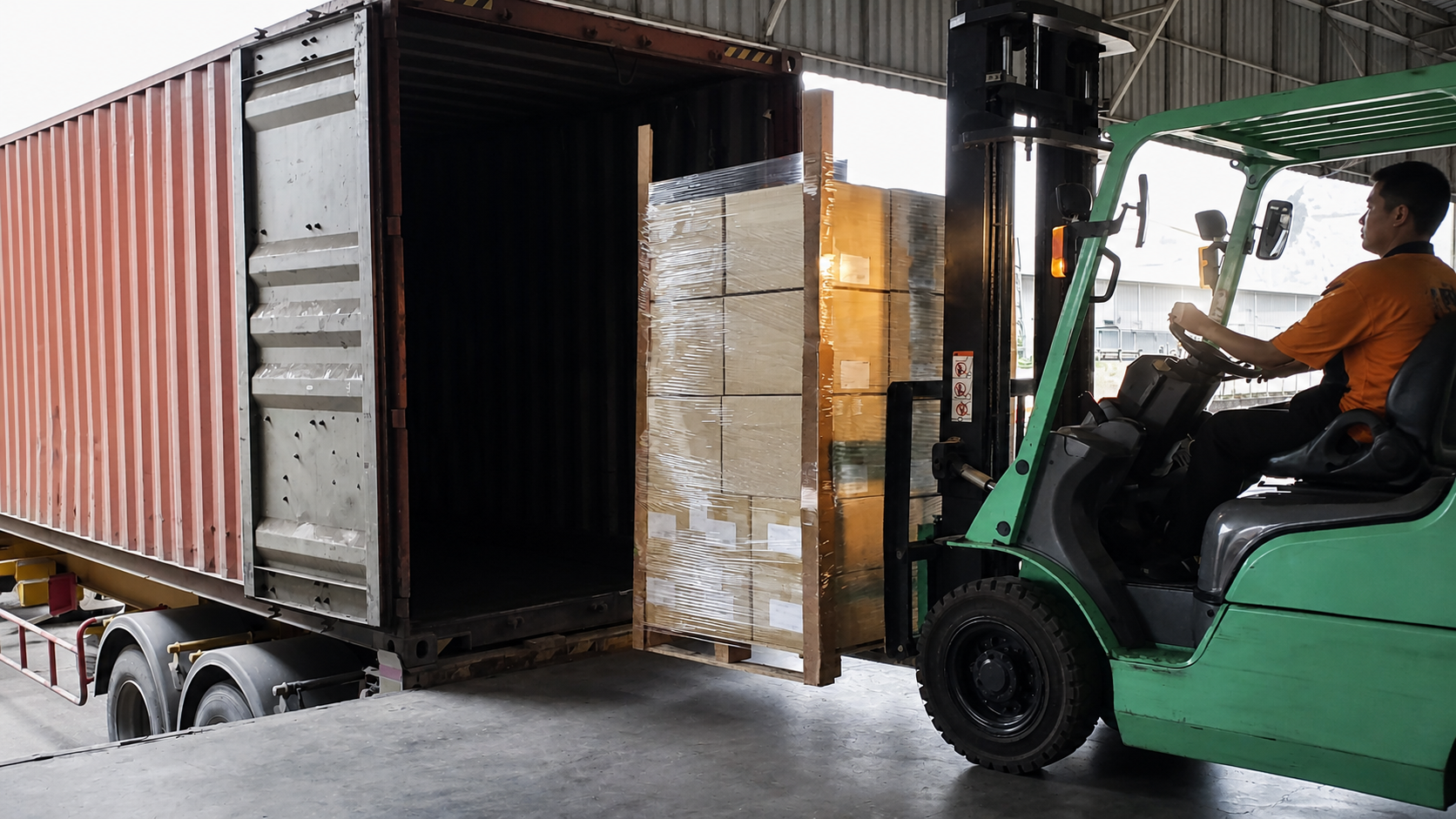
Cross-docking and transloading both move freight through an intermediate logistics facility, but they solve different problems.
Cross-docking focuses on whether freight needs to enter regular storage. Goods are received, checked and moved toward an identified outbound shipment without going through the normal putaway and later picking process.
Transloading focuses on whether freight needs to change transportation equipment or modes. Goods are transferred from an ocean container, railcar or inbound trailer into equipment better suited to the next leg of the journey.
The two are not always alternatives. An imported shipment may be transloaded out of an ocean container, divided by destination and moved directly onto outbound trucks. In that case, the operation includes both transloading and cross-docking.
For Canadian importers, manufacturers, wholesalers, ecommerce brands and retail suppliers, the right question is therefore not simply “Which service is better?” It is:
What has to happen between the inbound load and its next destination?
Cross-Docking and Transloading at a Glance
| Decision point | Cross-docking | Transloading |
|---|---|---|
| Primary purpose | Move freight toward outbound distribution without regular storage | Transfer freight between transportation equipment or modes |
| Typical handling | Receive, verify, sort, consolidate or divide, then stage for outbound loading | Unload, transfer, reconfigure or palletize for the next transport leg |
| Does freight enter the warehouse? | It may enter the facility and be scanned or staged, but it usually bypasses regular putaway | It may be transferred directly or placed into storage afterward |
| Must the next destination be known? | Usually yes, either before arrival or shortly after receipt | Not necessarily, although the next handling step must be defined |
| Common Canadian use case | Inbound freight divided by retailer, distribution centre or delivery route | Imported cargo moved from an ocean container into domestic trailers |
| Can both happen together? | Yes | Yes |
How Cross-Docking Works in Warehousing
Cross docking in warehousing works best when inbound freight arrives with an identified outbound requirement or can be assigned to one shortly after receipt. The provider may scan the shipment, confirm quantities and condition, and place it in a temporary staging area. The freight is then sorted, consolidated or divided before being loaded for its next destination.
The important distinction is that the goods do not enter the regular storage cycle:
Receive and verify → stage or sort → load for outbound movement
Rather than:
Receive → put away → store → receive a future order → pick → ship
This does not mean the freight can never enter a warehouse building or appear in a warehouse system. It may need a receipt record, inspection or temporary staging location. What it normally bypasses is long-term storage and routine order picking.
When a Cross-Docking Path May Fit
Cross-docking may be useful when:
- Freight is already assigned to a retailer, distribution centre, customer or delivery route.
- Several inbound shipments need to be consolidated into one outbound load.
- One inbound load needs to be divided among several destinations.
- A long-haul shipment needs to move into regional delivery routes without being stored.
If the destination, quantity, labels or receiving appointment cannot be confirmed, the freight may need to move into controlled storage instead.
How Transloading Works
Transloading is required when the freight needs to move from one transportation unit or mode into another before continuing its journey.
A common Canadian import flow is:
Ocean container → local drayage → transload facility → domestic trailer → inland destination
The cargo may be floor-loaded in the container and then palletized for domestic transportation. It may also need to be divided across several trailers, reconfigured to suit receiving requirements or transferred into a vehicle that can access the final destination.
Unlike cross-docking, transloading does not depend on the freight bypassing storage. After the transfer, the goods may leave immediately, remain in a staging area or enter regular warehouse inventory.
When a Transloading Path May Fit
Transloading may be appropriate when:
- Imported cargo needs to move from an ocean container into domestic transportation equipment.
- Freight is changing between rail and truck transportation.
- The original equipment is not suitable for the next route or receiving location.
- Floor-loaded cartons need to be palletized before domestic distribution.
When choosing a transload facility, shippers should confirm what “transloading” includes. Container unloading, pallet build, wrapping, labelling, sorting, temporary staging and outbound loading may be separate handling steps rather than one automatically bundled service.
A Canadian Shipment May Need Both
Consider an importer bringing a container of packaged consumer products through the Port of Vancouver. The goods are already allocated to three retailer distribution centres in different Canadian markets.
At the facility, the cargo is:
- Unloaded from the ocean container.
- Checked and palletized.
- Divided according to the three retailer orders.
- Loaded onto separate domestic trucks without entering regular storage.
Moving the goods from the ocean container into domestic trucks is transloading. Dividing the freight by destination and moving it directly toward outbound distribution is cross-docking.
If the same container were unloaded and the products placed into storage to wait for future ecommerce orders, the operation could still include transloading, but it would not be a typical cross-docking flow.
This is where several logistics services may need to operate as one plan. Transnova supports these steps through transloading and cross-dock services, container unloading and inbound handling. Its B2B retail distribution services also include pallet build, outbound preparation, retailer distribution-centre deliveries, LTL and FTL distribution, and inventory visibility.
The required combination depends on how the freight arrives, what happens next and whether any portion needs to enter inventory.
How to Decide Which Operation the Shipment Needs
The simplest way to choose is to match the operation to what the freight needs next.
| Shipment condition | Path to investigate |
|---|---|
| The existing vehicle or container can continue directly to one receiving destination | Direct transportation may be enough |
| The freight must change equipment or transportation mode | Transloading |
| The destination is known and the freight should bypass regular storage | Cross-docking |
| The freight must change equipment and then be divided or consolidated for immediate outbound movement | Transloading and cross-docking |
| The destination is not yet known or the goods must wait for future orders | Warehousing or fulfillment |
Cross-docking does not always require a customer sales order. A retailer replenishment plan, transfer order or routing instruction may provide the outbound direction. What matters is that the allocation and receiving requirements can be confirmed quickly enough to keep the freight moving.
What to Prepare Before Freight Arrives
Both operations depend on accurate information and a defined next step. Before requesting cross dock services or asking a provider to plan a transloading operation, prepare:
- Container, shipment, purchase order and carrier references.
- SKU, carton, pallet and quantity details.
- Product dimensions, weights, packaging and pallet configuration.
- Destination, retailer or distribution-centre requirements.
- Appointment dates, receiving contacts and routing instructions.
- Labelling, palletizing, wrapping or outbound-preparation instructions.
- The decision to make if quantities, condition, labels or documents do not match.
For customs registration, tariff and other import requirements, consult the CBSA guidance for importing commercial goods into Canada.
Exception ownership matters because an inbound plan can change. A destination may reject the load, an appointment may move, cartons may arrive damaged, or the received quantity may not match the paperwork. Before freight arrives, confirm who can place it on hold, approve rework, change the destination or release it for the next movement.
What to Ask a Provider
When evaluating cross docking services or transloading services, ask the provider to explain the actual freight flow rather than relying on the service label alone:
- Where will the freight be received, checked and staged?
- Which unloading, sorting, palletizing, labelling and outbound-loading steps are included?
- How are quantity, condition and SKU discrepancies recorded?
- What happens if the outbound vehicle, destination or appointment is not ready?
- When does temporary staging become chargeable storage?
- Which shipment or inventory statuses can the shipper review, and which transportation steps require another carrier?
The answers should make the handoff, service boundary and exception path clear before the shipment is in motion.
Plan the Handoff Before the Shipment Arrives
Send Transnova your container details, freight configuration, destinations and receiving requirements. The team can map the required unloading, transloading, cross-docking, storage and outbound distribution steps before arrival, including which freight should keep moving and which should enter inventory.
FAQ
Does Cross-Docking Mean Freight Never Enters a Warehouse?
No. Freight may enter the facility, be scanned, checked and placed in a temporary staging area. The defining feature is that it normally bypasses regular putaway and long-term storage before moving toward an outbound shipment.
Does Cross-Docking Require a Customer Order Before the Freight Arrives?
Not always. The outbound direction may come from a customer order, retailer replenishment plan, transfer order or routing instruction. However, the destination and allocation generally need to be known before arrival or confirmed shortly afterward.
Does Transloading Always Involve Changing Transportation Modes?
No. Transloading may move freight between different modes, such as rail and truck, but it can also transfer cargo between different types of equipment. Moving goods from an ocean container into a domestic trailer is a common example.
Can a Shipment Require Both Cross-Docking and Transloading?
Yes. Cargo may be unloaded from an ocean container, transferred into domestic transportation equipment, divided by destination and moved directly onto outbound trucks. The equipment transfer is transloading, while bypassing regular storage and moving directly toward outbound distribution is cross-docking.