
For any business moving goods across North America, the term barge meaning is more than just a boat on a river. It represents one of the most cost effective ways to manage a heavy supply chain. At Transnova, we help our clients understand the best ways to move cargo, including when a barge boat makes sense for massive scale and lower costs.
If you are looking at your logistics strategy, understanding what is a barge and how it fits with other transport modes is essential. It is the middle link that connects ocean freight cargo to inland destinations.
What is a Barge and Why is it Different?
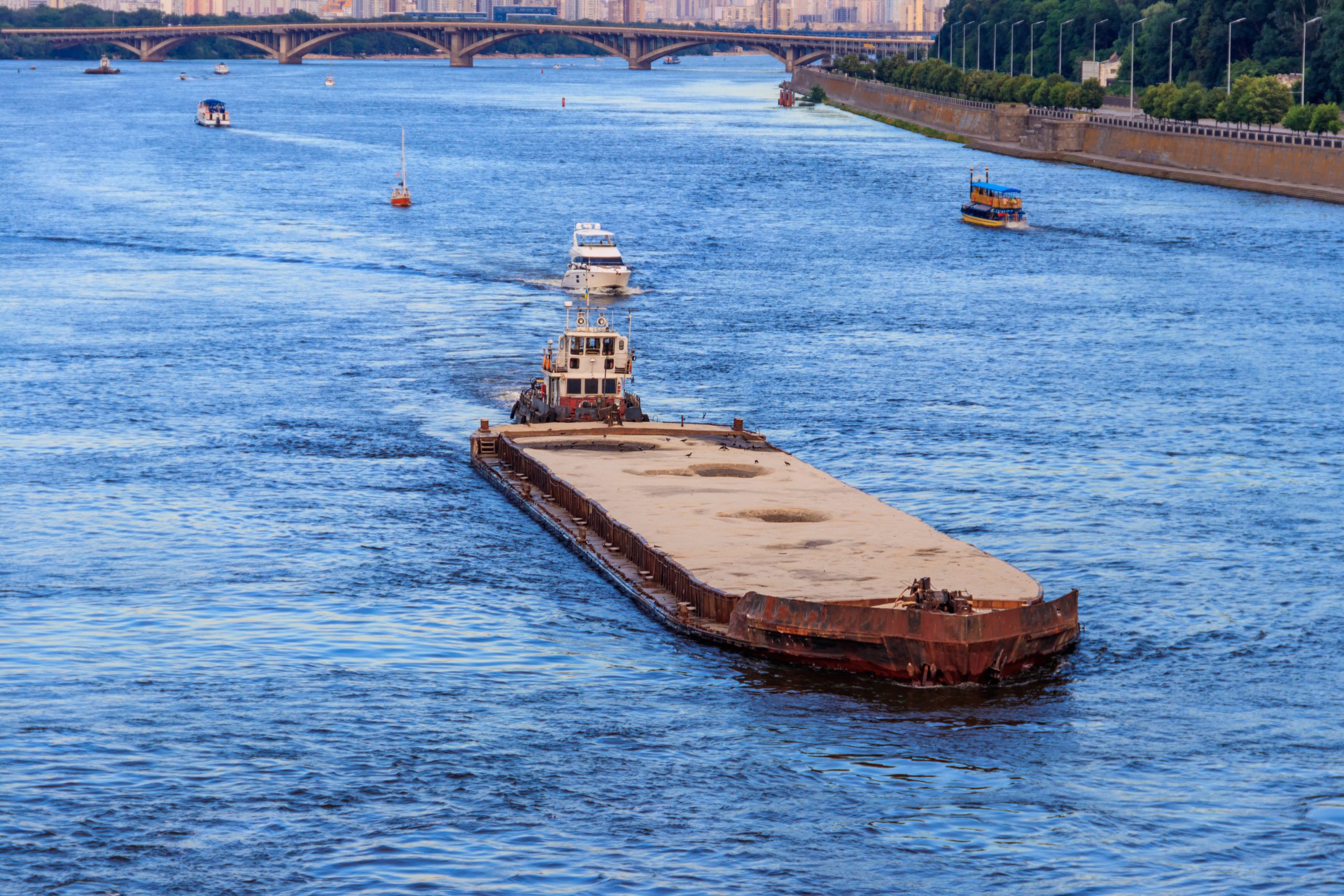
The basic barge definition is a flat bottomed vessel used mainly on rivers and canals. Most people are surprised to learn that a barge boat usually has no engine of its own. It stays in motion because a tug boat pushes or pulls it through the water.
Because of its flat design, a barge ship can carry thousands of tons in shallow water where a deep sea ship cannot go. This makes it a highly efficient tool for moving bulk items like grain, construction materials, or heavy machinery.
In some cases, a landing barge is used for special projects. A landing barge has a built in ramp so that equipment can be driven directly onto the shore. This is very helpful in remote areas where there are no formal docks for a truck or a standard ship to unload.
Barge Shipments vs Trucking: The Cost Factor
In a business context, the real meaning of barge is efficiency. One single barge boat can carry the same amount of weight as dozens of large trucks.
When evaluating your supply chain structure, consider the following comparison: If you move ocean freight cargo into a major port, you have two main choices for the next leg of the journey. You can hire 60 trucks to move the cargo by road, or you can use one tug boat to move a barge inland.
While the barge ship is slower than a truck, the cost per ton is much lower. For non urgent cargo, barge shipments provide a massive budget advantage. It reduces the pressure on road transport and avoids the high costs of fuel and tolls that come with long distance trucking.
Integrating Waterways into Your Strategy
At Transnova, we see the barge definition as a key part of intermodal logistics. The journey of your goods does not have to be only by road or only by sea. A smart strategy uses both.
- Your goods arrive as ocean freight cargo from overseas.
- The cargo is moved to a barge boat to travel hundreds of miles inland via a river system.
- Finally, a truck picks up the goods at a river terminal for the last mile delivery.
By using a tug boat and a barge for the longest part of the inland journey, you save money and reduce the carbon footprint of your business. This is why the barge definition is so important for modern logistics managers to understand.
How Transnova Helps You Manage Cargo
Understanding what is a barge is only the start. The difficult part is managing the timing between the barge ship at the river port and the trucks waiting at the warehouse.
At Transnova, we specialize in these complex connections. We don’t just look at one way to move goods. We look at the whole picture to see if barge shipments can make your supply chain more profitable. Even when we are not operating the tug boat, we coordinate the land-side operations to ensure the entire shipment remains synchronized.
Visit our website to discuss how we can optimize your shipment strategy.